
Seated Pelvic Reset
Alternate anterior and posterior pelvic tilts while seated. Keeps lumbar discs decompressed during long focus blocks.

Each tab surfaces routines calibrated to your furniture type and spatial constraints.
Alternate anterior and posterior pelvic tilts while seated. Keeps lumbar discs decompressed during long focus blocks.
Place one hand on opposite knee and rotate through mid-back. Restores rotation lost from fixed chair backs.
Extend arm palm-up on desk edge and gently press down. Addresses typing-related forearm tension.
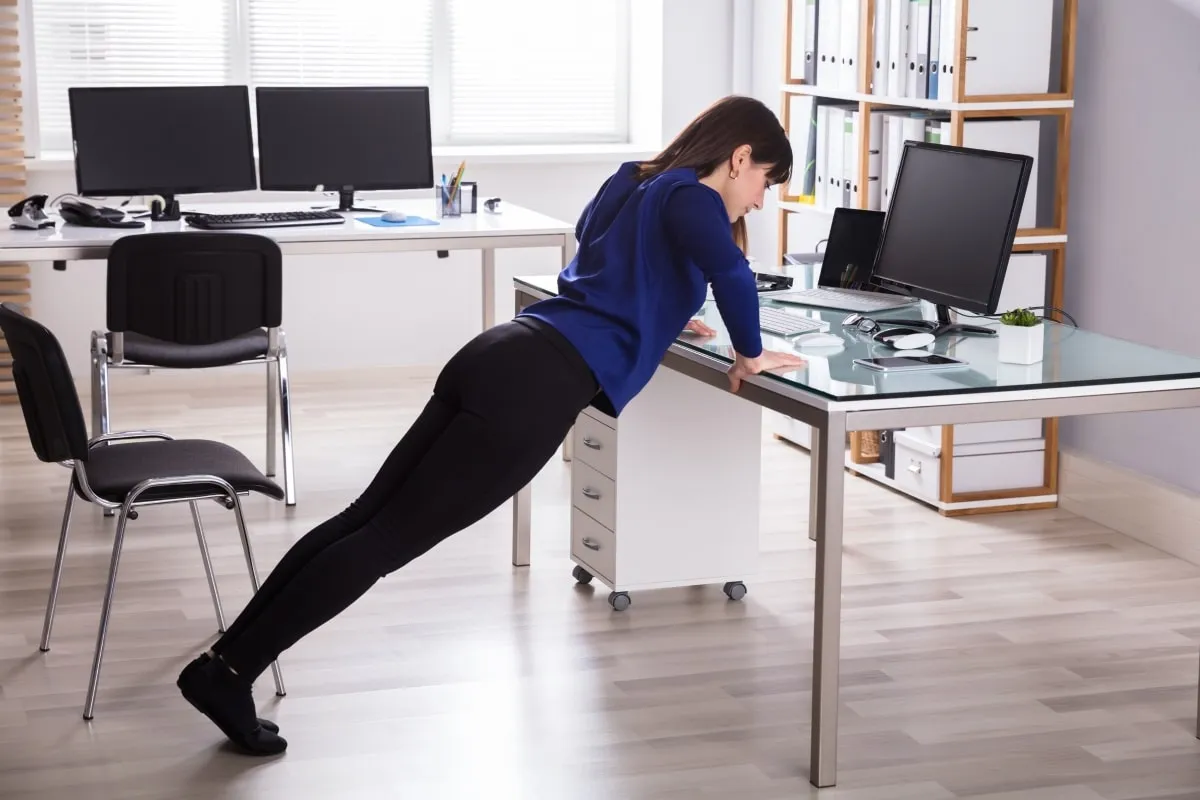
Shift weight between legs in slow cycles. Reduces static load on calves and lower back during standing sessions.
Light fingertip contact on desk edge while performing slow calf raises. Activates lower leg circulation.
Interlace fingers overhead and hold for 30-second intervals. Opens thoracic extension after screen focus.

Rotate ankles under the table in both directions. Maintains circulation in tight seating arrangements.
Retract scapulae and hold for 10 seconds, repeat 6 times. Counteracts forward slump in low chairs.
Gently tilt ear toward shoulder on each side. Releases lateral neck tension without visible movement.
All routines are designed for zero equipment and minimal spatial footprint. Perform during natural pauses — between emails, after calls, or at calendar transitions.
Each sequence fits within a standard 3-minute window between scheduled tasks.
Movements remain subtle enough for open-plan and shared meeting environments.
Rotate through different routines daily to address varied muscle groups systematically.
If you know the specific area causing discomfort, use the Anatomical Audit tool to pinpoint the biomechanical cause and receive a focused routine.
Open Diagnostics